

1. June - 31. October 2000

Azerbaijan

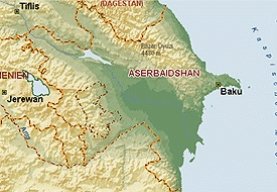
Oil nation on the Caspian Sea
The course of Azerbaijan´s history can be traced by taking the Azeri language as an indicator. Following the Islamization of the region in the 7th century, Azeri was written in Arabic script. In 1929, a transition to the Roman alphabet took place. After a brief period as an independent republic (1918-1920) Azerbaijan was absorbed into the Soviet Union. The Latinization of the Turk languages was to lead to the decline of the Islamic influence there. Ten years later Stalin ordered the imposition of the Russian Cyrillic alphabet. After the proclamation of independence in 1991 the Latin alphabet was officially reintroduced.
Over 80 per cent of the Azeri are Shi`ah Muslims. A Russian minority group exists and the autonomous region of Nagorno-Karabakh is mainly inhabited by Armenian Christians. The war between Armenia and Azerbaijan over this region ended in a cease fire in 1994. Since then the Conference on Security and Co-operation in Europe has been attempting to find an acceptable political solution.
Azerbaijan is regarded as the cradle of the modern petroleum industry. Around 1900 over half of the world's oil requirements were produced there. Although their relative importance has diminished, natural gas and mineral oil remain the backbone of the Azerbaijani economy to this day. The offshore deposits in the Caspian Sea are extracted with foreign support. However, the states bordering on the Caspian Sea disagree on the international status of the world's largest inland sea.
The classification as either a sea or inland water is also of importance to the fishing industry. The Caspian Sea is the home of the sturgeon, whose eggs provide the highly prized caviar. In the fertile valley of the Kura and Araks rivers agriculture thrives. A dam for the Kura is located near Mingäçevir and an extensive irrigation network allows cereals, cotton, wine and vegetables to be grown.