1. June - 31. October 2000

Burkina Faso

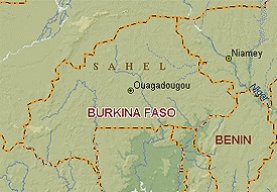
Land of the Honourable
"Land of the Honourable" - that is what Burkina Faso means in translation. In 1984, the former Upper-Volta, lying above the three Volta-rivers, named itself Burkina Faso. The former French colony changed names six times during the last 100 years. At the turn of the 20th century, present-day Burkina was integrated into the French colonial system in West Africa. It became independent in 1960.
The historical origins go back to the Neolithic age around 10,000 B.C. In the region of the Lobi - the Southwest of Burkina - there are numerous remains of houses and villages presumably dating back to the Egyptians and Phoenicians. A rather large part of Burkina's history still lies in the dark. In the 15th century the kingdoms of the Mossi and Gurma existed of which the Mossi empire of Ouagadougou in the centre of the country was the most powerful.
The population of Burkina Faso is a mosaic of more than 60 tribes living peacefully together without ethnic clashes.
Agriculture still plays the most important role economically. It feeds the approximately 10 million people and about 70 percent of the working population do so in agriculture. An growing amount of sorghum, millet and rice are exported as well. However, the most important foreign exchange earner is cotton accounting for about one third of export profits.
To improve their energy supply, Burkina increasingly uses water power: the construction of two dams has started in 1998. The Ziga dam with a capacity of 200 million cubic metres is to provide water for the fast-growing capital Ouagadougou.