
1. June - 31. October 2000

Burundi

Old Wounds...
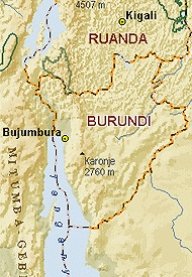
Burundi lies at the heart of the African continent on the shore of Lake Tanganyika. The country is one of the smallest and most densely populated nations in Africa. Between
1960 and 1980, the area of forested land was cut in half by intensive harvesting of firewood. Over 80% of the nation's area is used for agriculture. In addition to growing their own food, the people of Burundi also grow coffee, tee and cotton for export. But as a land-locked country, the transportation arteries to foreign markets are long and difficult to pass: export goods are transported across Lake Tanganyika and through the Republic of Congo or Tanzania.
More than 80% of Burundi citizens are Hutus; the Tutsis make up 15% of the population. The history of the conflict between the two groups stretches far into the past and continues to influence the fate of the nation. Around 1400, the pastoral Tutsi people from the north settled in Burundi region. They conquered the Hutu farmers and in the 17th century they established a sacral kingdom. Neither missionaries nor colonial control could destroy their cultural identity. The national museum in the city of Gitega preserves their cultural heritage.
Burundi became an independent kingdom in 1962 after living under German and Belgian colonial control. In 1966, the monarchy fell. The friction between the Hutu majority and the Tutsi minority, who dominated the military, remained unchanged.
A charter for national unity appeared to be moving Burundi along the process to democracy in 1990 until violence broke out between radical Hutu and Tutsi groups, claiming over 250,000 lives. Most of the dead were civilians. At least 280,000 citizens of Burundi fled to Tanzania to escape the civil war.