

1. June - 31. October 2000

Côte D'Ivoire

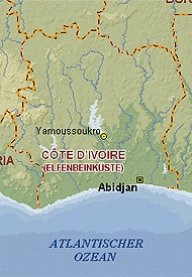
African Wonderland
Skyscrapers like Manhattan and a basilica made completely from concrete and almost as large as St Peters of Rome: Côte d'Ivoire's rise as the "economic wonderland" on the African continent shows in his modern architecture.
Legend has it that the French king had sent the knight Amon as an ambassador to the chief of Assynia - a region in modern Mali. Amon brought the chief's son, Prince Anabia, back to France and had him christened. King Louis XIV made the prince his godchild and an officer. As such Anabia commanded troops of the French army.
At the end of the 19th century the Ivory coast became French colony and in 1946 a member of the French Union. After its independence in 1960 the country has seen a quick economic growth within two decades: President Houphouet-Boigny, who worked as a minister under two French governments, managed to attract many foreign investors to the country.
The downturn in world market prices for cocoa and coffee put the brakes on the economic development in the 80ies. But the Ivory Coast still maintains its position as the worldwide leading producer of cocoa. Cocoa profits provide a third of the country's export income whereas the export of timber slumped. The country's coffee production puts it in 10th place internationally.
The Ivory Coast holds one of the most important and extensive African art collections. A visit in the National Museum of the capital Abidjan gives an impression of the cultural variety expressed by the various tribes living in the country.