
1. June - 31. October 2000

Estonia

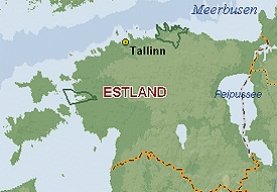
Islands, water and forests
Estonia lies between the Finnish Coast and the Bay of Riga. Within the borders of Estonia there are 70 islands, including Saaremaa (Ösel) and Hiiumaa (Dagö). Due to its geographical and cultural proximity to Finland, Estonia has a very close relationship to the Nordic countries. Estonian belongs to the Finno-Ugric languages.
Moors, expanding scotch fir, pine and birch forests define the landscape. Estonia is a paradise for birds and red deer; you will even find elks.There are over 1,400 lakes and 420 rivers. The Peipu lake on the Russian border, is the fifth largest inland waterway in Europe.
The Estonia of today considers itself to be a successor of the Republic of Estonia, which existed from 1918 to 1940. As a result of the outcome of World War I, the Estonians had to - and not for the first in their history - protect themselves from both the Germans and the Russians. The country had been colonised by the Germans since the 13th Century. The Russians conquered Estonia in the 18th Century during the Nordic War.
During World War II, Estonia was once again between the fronts: In June 1940, Estonia was occupied by the Red Army - a result of the Hitler-Stalin pact. One year later, during the war between Germany and the Soviet Union, Germany conquered Estonia. In 1944 the Red Army took back Estonia. In1949, deportations occurred on a large scale.
On August 8, 1991, Estonia declared its independence. The return to being a national state was peaceful. But this was not a foregone conclusion as the Estonians only make up 65 percent of the population; almost one third of today's population is of Russian descent.
The Estonians nurture their cultural heritage in folk songs, literature and national customs. The Estonian composer Arvo Pärt became famous primarily for his hymns. The historical novels by Jaan Kross have been translated into many languages.