1. June - 31. October 2000

Macedonia, Former Yugoslavian Republic

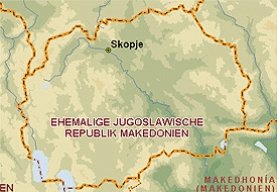
In the heart of the Balkans
Macedonia is a country of lakes and monastries. Although it has no direct access to the sea there are wonderful lakes like the lake Ohrid on the border to Albania. Here the ancient city of Ohrid lies, named by the UNESCO as world cultural heritage. In medieval times, the city was the capital of the Bulgarian Empire of which the area of modern Macedonia was part of. The transit country between Greece and Serbia has a rather varied history.
After the defeat of the Serbs in the famous battle of Amselfeld in 1389, Macedonia came under Ottoman rule for 500 years. As a result of the Balkan wars it was divided and Greece, Serbia and Bulgaria each got a third of the country. Since 1918 the area of modern Macedonia belonged to the Republic of Yugoslavia.
Macedonia managed to separate peacefully from the Federal Republic of Yugoslavia without war. Doing that it had not only to handle Yugoslavia's opposition. The neighbour Greece had doubts whether the newly founded Republic would claim areas that had been integrated into Greece and sued at the International Court. The court decided in April 1993 that Macedonia should be called "Former Yugoslav Republic Macedonia". As a gesture of accommodation the Macedonians changed their flag now showing a sun with 8 beams on red ground. Albanians, the biggest minority with 25 per cent of the population, have been granted far-reaching autonomy.
The economy of the small country suffered hard from the UNO embargo of Yugoslavia and a trade blockade against Greece. After the lift of the sanctions the economy is recovering slowly but it still depends on international support.