
1. June - 31. October 2000

Moldova

Roman roots
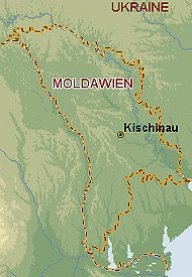
In the Moldovan capital you will find a replica of the famous Roman statue of the she-wolf suckling Romulus and Remus. The inscription tells you why: "De la Roma venim" - We have descended from Rome. Like the neighbour Romania, Moldova was 'romanised' early on. Its Language, closely related to the Romanian language, and its culture prove it even nowadays.
Its situation on one of the great European roads resulted in a rather motley history. Since the 16th century the country belonged to the Ottoman Empire as an independent principality. It experienced a cultural climax during the rule of the Basarab dynasty. In 1812, Moldova was annexed by Russia and called Bessarabia. After the Tsar was toppled, Moldova became independent and united with the Kingdom of Romania. In 1924, the Moldavian Autonomous Soviet Republic was founded east of the river Dniester (Transdniester).
The larger part of the country still belonged to Romania but in 1940 Romania had to give up Bessarabia to the Soviet Union. By uniting Transdniester and Bessarabia the Moldavian Soviet Republic was founded.
In August 1991 Moldova declared its official independency as a Republic. Already two years ago, the Moldovan language had been re-established as the official language. Cyrillic letters were abandoned and Latin writing brought back. These decisions incurred the displeasure of Russian and Ukrainian minorities. In the region east of the Dniester where mostly Russians and Ukrainians live unrest spread. It was placated by granting far-reaching autonomous rights similar to the Southern region where the Turk language Gagaus is spoken. The government tries to prevent further conflicts by involving minorities in highest governmental offices.