
1. June - 31. October 2000

Nigeria

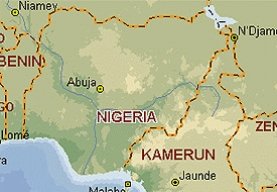
The African giant
"We not only have oil, but also ideas." With a dynamic and creative population of well over 100 million people, Nigeria has the largest population in Africa.
Its present-day national borders date back to the British colonial era. This huge country is rich in peoples, languages, cultures and religions. There are 374 ethnic groups, of which three - the Hausa, Ibo and Yoruba - make up around 40 percent of the population. The federal organization with 36 different states reflects this variety.
Nigeria is the home of ancient civilizations. Terracotta figures discovered in the 1940s have shed light on the culture and way of life of the Nok, thought to date from the first millennium AD, who influenced later civilizations in the region. These are the oldest known sculptures south of the Sahara. In the 15th century Arab travelers gave accounts of the flourishing city-states in the north of what is now Nigeria. In the south, the first Europeans came across well-organized Yoruba kingdoms. The ancient artistic traditions live on to this day in the traditional crafts and sculptures.
Nigeria is the world's sixth largest producer of crude oil. 85 percent of its export income comes from oil, which is obtained from the Niger delta. The disastrous ecological damage on the oil fields has led to national and international protests.
After 15 years of military rule, since 1999 Nigeria has set itself on the road to democracy. As part of the policy of national rebirth the government is making every effort to develop the economy to benefit from the country's other rich natural resources, thus reducing the dependence on oil exports.