1. June - 31. October 2000

Papua New Guinea

"Each village has its own culture"
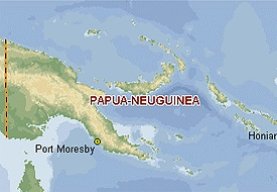
The national territory of Papua New Guinea lies mainly on the island of New Guinea, whose western half is part of Indonesia. The uplands in particular are so thickly forested and inhospitable that settlements have continued for millennia without coming into contact with neighboring groups. "Each village has its own culture," as the Papuans say. There are several thousands of communities, of which the majority comprise only a few hundred people and yet have their own unique cultural identity. There are around 700 languages spoken in Papua New Guinea, and 200 to 300 of these are totally unrelated.
The present-day Papua New Guinea has been inhabited for at least 50,000 years. There are traces of early agricultural developments contemporaneous with those in Mesopotamia and Egypt. New Guinea was known to Indonesian and Asiatic seafarers centuries before the Europeans discovered it.
The various parts and islands of the country have had periods of British and German colonial rule. In 1921 Papua became an Australian mandated territory. After the Japanese occupation during the Second World War the Australian mandate was extended to the whole of Papua New Guinea. The country finally gained its independence in 1975.
Today the development of Papua New Guinea is based on its wealth of natural resources. Gold, copper and oil exports account for most of the currency receipts. Timber, coffee, and cocoa are also significant export products. Twenty years ago, the majority of the population was employed in agriculture, but now the mining industries employ almost a third of the working population.