

1. June - 31. October 2000

Rwanda

Land of a Thousand Hills
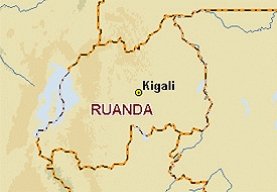
The "land of the thousand hills" lies in a region of Africa's great lakes. Even the capital city, Kigali, consists of several hills, each marked by a church or an especially prominent building. The road to the east of Kigali leads to the country's largest attraction, the Kagera Park, which is a natural reserve of around 390,000 acres. The Kagera, one of the source rivers of the Nile, forms the border to Burundi. Similar to its neighbour, Rwanda has one of the densest populations in all of Africa; around 85 percent are Hutus and 13 percent Tutsis.
Rwanda, like its neighbour, has the problem of an ethnically divided society, though the conflicts are in fact different. During Belgian colonisation, the Tutsis were systematically privileged as part of a philosophy of "divide and rule". Even before the colonisation period had come to an end, the Hutus managed to overthrow the Tutsi monarchy. The first systematic political outbursts of violence between the two groups occurred in 1959, and many Tutsis fled to neighbouring countries. In 1961, Rwanda became an independent republic with a Hutu government.
The situation escalated at the beginning of the nineties. Tutsi rebels in Ugandan exile failed in an attempt to overthrow the government. In the aftermath, a carefully prepared plan to eliminate the Tutsi leadership and the democratic Hutu opposition in Rwanda unfolded in a vicious blood bath. In 1994, the world witnessed the killings of 700,000 - 1 million people in a period of only three months.
Five years later there is hope again in the country. There still are individual cases of conflict and violence, but the current government no longer bases its policies on a philosophy of ethnic differentiation. Prosecution of the wrongdoers, the "genocidaires" remains one of the most important internal political tasks. The international tribunal for genocide passed the first six convictions in 1999.