

1. June - 31. October 2000

Samoa

The center of Pacific culture
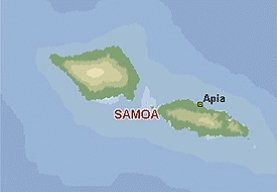
Samoa lies in the middle of the Pacific. This is the "inner sanctum" from where the settlement of the Pacific islands originally spread. The island state of Samoa includes the Western Samoan Islands, on which nineteenth-century German, US American and British settlers operated extensive plantations. In 1889, the competing interests of the foreign powers almost led to a war between them. Ten years later, Germany and the United States divided the Samoan Islands between themselves.
Since the beginning of the 20th century there has been a native opposition movement against German rule on the Western Samoan Islands. This opposition continued also when New Zealand assumed power from 1914. In 1962, Western Samoa was the first Pacific island state gain its independence. As the eastern Samoan Islands have ultimately remained with the USA, the country was called Samoa in 1997.
The sustained resistance of the Samoans has its foundations not least in their distinctive cultural identity. The customs and traditions of Samoa are regarded as the oldest Polynesian culture. Christianity, introduced by European missionaries, has been largely integrated into their traditional way of life.
The protection of the indigenous culture of Samoa has been remarkable and remains so today. Eco-tourism has been introduced, and along with the export of copra and cocoa has become an important source of income. Politically, a unique combination of modern and traditional democracy has evolved. The parliament is freely elected. However, only some 18,000 Matais may stand for election; these are selected as leaders by consensus among the family clans, and have always represented the undisputed voice of authority in the more than 350 villages of Samoa.