



1. June - 31. October 2000

Zimbabwe

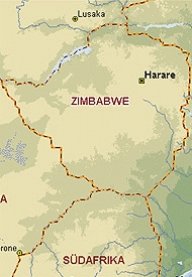
Old and great traditions
Initially, the Europeans who discovered the ruins of Zimbabwe in 1867 did not want to believe that black Africans could have achieved so much. The fact that between the 11th and 15th century, an African empire had its heyday just did not fit with the stereotype of Africa that was believed to be without a history or a culture. In 1889, Cecil Rhodes founded the British South African Company. The colony that would be later be called Rhodesia was named after him. When the neighbouring British colonies became independent in the 1960s, the white settlers in Rhodesia declared their independence from Great Britain and in 1965 established a white minority government. The anti-racism resistance could assert their vote under British law and for this reason, the African People's Organisation (ZANU), lead by President Mugabe, won by an overwhelming majority. The most important ethnic groups in Zimbabwe are the Shona, making up 70 per cent of the population and the Ndebele with about 16 per cent. Their languages are also the most widely spoken, next to English. Authors such as Chengerai or Charles Mungoshi write in Shona and in English. As a result of the fight for freedom, the old Shona culture was revived. The Mbira music was looked down upon during colonialism. The singer Thomas Mapfumo took up the Mbira music using modern instruments and has made it world famous. The country is well developed and offers a modern rail and road system. Farming in Zimbabwe can provide for its population. Tobacco, maize, cotton and beef are important sources of foreign income. But local farmers are still awaiting the land reform that was promised during the fight for freedom.