

1. June - 31. October 2000

Tajikistan

On the roof of the world
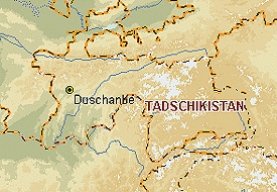
The Tajiks also call their country "The Roof of the World". Half of its surface lies above 3,000 metres. The highest mountain is in the Pamir mountain range - the Peak Ismail Samani with 7,483 metres. Until 1933 it was called Peak Garmo, then Peak Stalin and from 1962 - 1998 Peak Kommunisma.
Tajikistan was the throughway of the famous Silk Route. After the discovery of the sea passage to India the country lost its importance internationally. In the 19th century the North of today's Tajikistan was made part of the Russian general province Turkestan, while the South, which had been part of the Uzbek emirate Buchara since the 17th century remained part of it for the time being. After the Russian revolution the North of the country became part of the Soviet republic Turkestan while the rest of Tajikistan became an autonomous republic within Uzbekistan. From 1929 Tajikistan became a union republic in its own right.
Nearly two thirds of the population are Tajiks and are an ethnic Iranian people. Their language - Tajik - is closely related to Persian. The Uzbeks on the other hand, who make up a quarter of the population are a Turk people. The percentage of Russians has declined sharply since 1992. The majority of the inhabitants are Sunni muslims.
Even before the republic of Tajikistan declared its independence on the 9th of September 1991, there was unrest in the capital Duschanbe. The power struggle escalated into civil war in 1992. In 1997 the opposed parties signed a peace agreement. Since then the national peace commission is making efforts to secure a stable peace.
Tajikistan is rich in water resources so that the arable land can be irrigated. A well educated population and an industrial infrastructure are two factors for a favourable future development.