



1. June - 31. October 2000

Uzbekistan

Silk and Cotton
The Uzbeks belong to the Turkic people. Since the former part republic of the Soviet Union has become independent in 1991, the Uzbek language is the official and school language again. The vast majority of the population are Sunnite Muslims.
The old oases cities of Samarkand, Bukhara and Khiva had been centres of the Muslim culture for centuries. Even today, the madrasahs (seminaries) of Bukhara and Samarkand are renowned in the Moslem world. These cities were also important trading bases on the famous silk route. Their downfall set in when Vasco de Gama discovered the sea passage to India and China around the turn of the 16th century. The splendid mosques and seminaries still remind us of the glorious past.
In 1860 the region - at the time known as Turkestan - got under Russian colonial rule. After the fall of the tsar, the country experienced a short spell of independence until 1924 when it became part of the Soviet Union as Uzbek Socialist Soviet Republic.
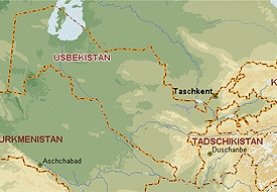
Uzbekistan developed into the largest cotton producer of the Soviet Union and the largest Cotton exporter in the world. To intensify the cotton production, fertilizer factories were build and a machine building industry developed. But the industrialisation and the huge areas needed for the cotton fields could be implemented only at the expense of nature: the big rivers of the country, Amu Darya and Syr Darya both flowing into the Aral Sea were used for irrigation. Their waters got polluted by salts and toxic substances. The expanse of the Aral Sea, the fourth largest inland lake in the world originally half as large as Switzerland has shrunk to almost half its size. The drying out of the lake and its salinization is the biggest ecological problem of the country and its inhabitants.