1. June - 31. October 2000
Belarus

Finally independent
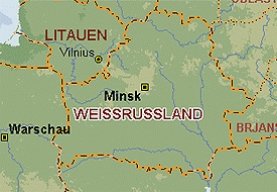
They have had their own language and ethnic identity for centuries but only since 1990 they have their sovereign state: Belarus. In Belarusian - a separate Slavonic language - 'belo' means white.
In medieval times Belarus was part of the Kievan Rus, the first East Slavonic state. After its dissolution Belarus became part of the Grand Duchy of Lithuania which united in 1386 with Poland. The Polish influence was dominant until the late 18th century. After the Third Partition of Poland Belarus fell under Russian rule.
The Belarus national movement that developed in the 19th century and was directed against Poland and Russia was not successful in the upheavals after World War I. In 1919 the Soviet Bolsheviks declared the Belarus Socialist Soviet Republic that became part of the Soviet Union in 1922.
After World War II Belarus - with rather poor natural resources - was designated the "assembly factory" of the Soviet Union. Machine construction and metal-processing industry were important and highly developed industries. The independent Belarus belongs to the three foundation members of the Commonwealth of Independent States (CIS). By keeping a good relationship to Russia the government hopes for economic improvement as the economy still suffers from the consequences of the Soviet breakdown.
Belarus was hit hard in 1986 by the Tschernobyl nuclear accident in the neighbouring country Ukraine. 70 per cent of the fallout went down on Belarusian area. 18 per cent of arable land was highly contaminated and thus cannot be farmed anymore. 31 people died, more than 100,000 had to be evacuated.