


1. June - 31. October 2000

Georgia

In the shelter of the Caucasus mountains
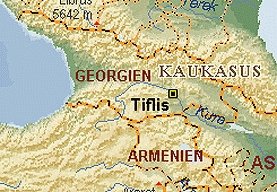
Lying between the shores of the Black Sea and the Caucasus mountains, Georgia has one of the most beautiful landscapes in the region. In the shelter of the Caucasus mountains which keep the north winds at bay, various fruits including citrus fruits, wine and tea are all cultivated. The climate is quite different on the highest mountain, the Kasbek, which looks down on the small villages from 5,047 meters. The glaciers extend down the valleys of the extinct volcano to 3,300 meters.
This multi-ethnic state includes almost a hundred different peoples. The Georgians themselves make up a good two thirds of the population. Georgia was annexed to Russia back in 1801, but possesses a rich cultural heritage of its own. This includes the Georgian church, which is among the oldest in the world. Monasteries and churches in the Georgian style with their wonderful frescoes still amaze visitors today. The Georgian language belongs to the South Caucasian, Kartvelian group of languages and uses its own alphabet. Georgian literature, art, music and theatre are all internationally recognized, and continued to be so even during the annexation to the Soviet Union.
Georgia possesses rich mineral resources, in particular manganese and barite, used in the manufacture of computer chips. Once the wealthiest constituent republic of the Soviet Union, Georgia is now among the poorest of the member states of the CIS. Reasons for the economic problems include the civil war which broke out shortly after independence in 1991, and the conflicts with the autonomous enclaves of Abkhazia and South Ossetia. Following the signature of a cease-fire agreement with Abkhazia and the resumption of economic relations with the Russian Federation, the country is gradually recovering from the aftermath of war.