


1. June - 31. October 2000

Honduras

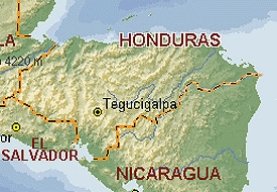
Adios banana republic image
Before it was conquered by the Spaniards the area today known as the Republic of Honduras was mainly populated by the Lenca and Maya peoples. The ruins of the Maya city of Copán near the Guatemalan border can still be visited today. Copán was one of the most important centres of the Maya Empire well into the ninth century.
1502 saw the arrival of Columbus and soon afterwards the start of the invasion by the Conquistadores. The Lencas launched a successful defence campaign against the troops led by the Spaniard Pedro de Alvarado. As a consequence, this brutal conquistador invited Lempira, the leader of the resistance fighters, for peace talks and then had him assassinated at the peace conference in 1539. Shortly afterwards the Spanish crown controlled the entire territory.
Towards the end of the nineteenth century Honduras, now an independent republic, relied on ore mining as the principle mainstay of its economy. The work down the mines was done mainly by Garifunas, members of a people of African origin.
In 1898 the first banana plantations in Honduras were created by the US United Fruit Company. This company was soon to control not only railways, ports and huge estates but also major government decisions. This, amongst other factors, accounts for why Honduras today is one of Latin America´s poorest nations. The United Fruit Company had very little interest in developing the country´s social infrastructure. After years of military dictatorship free presidential elections were held in 1981. Since then Honduras has undergone a gradual process of democratisation. Its economic development suffered a severe blow in October 1998 when Hurricane Mitch caused massive destruction and the loss of over seven thousand lives.